A compassionate guide to understanding your past — and reclaiming your emotional self.
By Dr. Lindsay C. Gibson, PsyD · Reviewed by Katie Geiser, LPC · 7 min read
New Harbinger Publications · 2015 · Genre: Psychology / Self-Help / Healing · ★★★★★ Therapist Recommended
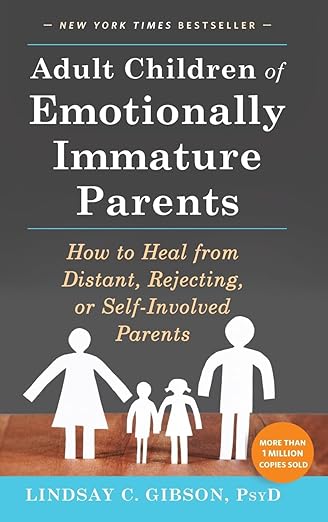
Some of the most painful childhood experiences leave no visible marks. There are no dramatic events to point to — just a quiet, persistent feeling of being emotionally alone, unseen, or somehow not quite enough. If you grew up with a parent who couldn’t truly connect with your emotional world, Adult Children of Emotionally Immature Parents by Dr. Lindsay C. Gibson may be the book that finally puts words to something you’ve carried your whole life.
I recommend this book regularly in my therapy practice, and the response is almost always the same: “I didn’t know this had a name.” That recognition alone — that your experience is real, valid, and shared — can be the beginning of something truly transformative.
If you’re exploring themes of childhood emotional neglect, anxiety, or complex relational patterns in your own life, this book is a powerful companion. And if you’re curious about what deeper healing could look like, trauma therapy and EMDR therapy in Madison, WI at A New Dawn Therapy may be a meaningful next step.
What This Book Is About
Dr. Gibson, a clinical psychologist with decades of experience, explores how emotionally immature parents — those who are uncomfortable with deep emotions, self-focused, unpredictable, or emotionally unavailable — shape their children’s development in ways that ripple far into adulthood.
Importantly, this is not a book about “bad” parents. Many emotionally immature parents love their children genuinely. The issue is not love — it is emotional capacity. And understanding that distinction is central to the book’s healing message.
“Children need emotional intimacy, not just physical care. When parents can’t provide this, children unconsciously adapt — and those adaptations follow them into adulthood.”
The Four Types of Emotionally Immature Parents
One of the most clarifying — and often relieving — sections of this book is Dr. Gibson’s framework of four distinct parent types. You may recognize one, or a combination, in your own experience:
The Emotional Parent: Volatile, reactive, and easily destabilized. The household mood often revolves around managing this parent’s feelings.
The Driven Parent: Achievement-focused and often physically present but emotionally distracted — pushing productivity over genuine connection.
The Passive Parent: Conflict-avoidant and checked out. Often kind, but unable to protect or truly engage with their child’s emotional needs.
The Rejecting Parent: Withdrawn and irritated by emotional closeness. Sends the message that the child’s needs are burdensome or unwelcome.
Understanding which type — or combination — shaped your early environment can be profoundly clarifying. It doesn’t assign blame. It assigns language to something that has been hard to name.
How Growing Up This Way Affects You as an Adult
Dr. Gibson devotes significant attention to the long-term impact of emotionally immature parenting. Children adapt brilliantly to what is available — but those adaptations, so useful in childhood, often become sources of real struggle in adult life.
She describes two common coping styles that adult children tend to develop:
- Internalizers turn inward — they take on too much responsibility for others, struggle to identify their own needs, and often present as highly capable while quietly suffering.
- Externalizers act outward — they may struggle with self-regulation in relationships, seek stimulation to avoid emotional discomfort, or blame others when feeling overwhelmed.
In either case, the underlying wound is similar: a self that never fully developed because its emotional reality was never truly witnessed.
In my work with clients navigating anxiety, relational difficulties, childhood emotional neglect, and a persistent sense of emptiness, I often find these patterns at the root. If you’re nodding as you read this, you’re not alone — and you’re not broken.
If these patterns feel familiar, I’d invite you to learn more about anxiety therapy at A New Dawn Therapy, or reach out to talk about whether trauma-informed support might be right for you.
The Healing Path Dr. Gibson Offers
This is where the book truly shines. Rather than leaving readers with simply a diagnosis of their past, Dr. Gibson lays out a practical and compassionate path forward. She introduces the concept of becoming your own “ideal parent” — developing the capacity to give yourself the emotional attunement and validation you didn’t receive growing up.
She also offers deeply practical guidance on managing the ongoing relationship with an emotionally immature parent — not by fixing them (she is clear this is rarely possible), but by changing your own expectations and engagement. This section is particularly freeing for readers who have spent years trying to earn a kind of connection their parent simply isn’t capable of offering.
Key themes in the healing section include:
- Reclaiming your sense of self and your emotional identity
- Recognizing and releasing the roles you played in your family system
- Setting limits with emotionally immature people in your current relationships
- Grieving the emotionally available parent you deserved
- Building a life rooted in your authentic self rather than survival strategies
How Therapy — Including EMDR — Can Take You Further
Reading this book is meaningful. It can give you language, validation, and a framework for understanding your story. But understanding something intellectually and healing it emotionally are two different things — and that’s where therapy comes in.
At A New Dawn Therapy, I specialize in trauma-informed care for adults navigating anxiety, relational wounds, and the lasting effects of childhood emotional neglect. I am trained in EMDR (Eye Movement Desensitization and Reprocessing), an evidence-based approach that helps your brain reprocess the memories and relational patterns that were formed in emotionally immature environments.
EMDR doesn’t just help you understand why you feel the way you do — it helps your nervous system update the old story. Old triggers lose their intensity. Patterns that no longer serve you begin to shift. The emotional self that never got to fully develop starts to come online.
If you’re curious about EMDR or trauma-informed therapy in Madison, WI, I’d love to connect. You can learn more about my approach on the services page or schedule a free consultation to get started.
Who This Book Is For
This book is for anyone who has ever felt emotionally alone in their family of origin — even if they can’t quite articulate why. It’s for adults who struggle with anxiety, people-pleasing, or a persistent sense of not being enough. It’s for parents who want to break a cycle they can finally see clearly. And it is for anyone in therapy who wants a companion resource to deepen their self-understanding between sessions.
“You didn’t cause your parent’s emotional immaturity, and you couldn’t have fixed it. But you can heal from it — and that healing begins with understanding what was actually happening.”
My Therapist’s Take
I recommend this book so frequently because it does something rare: it validates experiences that are hard to explain to others, and it does so with warmth and zero blame. Clients who read it often arrive to sessions with a new language for what they’ve been carrying — and that language becomes the foundation for real, lasting change.
Reading this book is a meaningful step. And if it stirs something in you — grief, recognition, relief, or a readiness to go deeper — I want you to know that support is available.
At A New Dawn Therapy in Madison, WI, I work with adults, parents, high achievers, and members of the LGBTQ+ community who are ready to move from surviving to truly thriving. Whether you’re processing a difficult childhood, navigating a complex ongoing relationship with a parent, working through anxiety or postpartum emotions, or simply trying to understand yourself better — you don’t have to do this work alone.
Ready to Go Deeper?
This book is a beautiful starting point — and therapy can take you the rest of the way.
→ Schedule a free consultation at A New Dawn Therapy
→ Learn more about anxiety therapy at A New Dawn Therapy
→ Explore all therapy services in Madison, WI
Note: This post contains an affiliate link. If you purchase through my link, I may earn a small commission at no extra cost to you. I only recommend books I genuinely use in my practice and believe in wholeheartedly.